$60.00
$119.99
50% OFF! Hot items selling fast—Grab them before they're gone!
 Unconditional Satisfaction GuaranteeNo Shipping Fees Above 302 Months to Decide. Returns Simplified.
Phacelia Seed – Coatedis out of stock forthe season. Check out Bee Seed For Homestead, Animal, & Gardenhere. Call our office with any questions (800-552-1027).Phacelia is a versatile plant that is used for bee forage, cover crop, erosion control, hay and forage. Phacelia is a top choice for pollinators. This guide growing plant has ample amounts of feathering lavender-blue fragrant flowers that attract bees and other beneficial bugs. Phacelia also has a great root structure for breaking up clay-type soils and it absorbs excess nitrogen and calcium that are in your soil.~~~
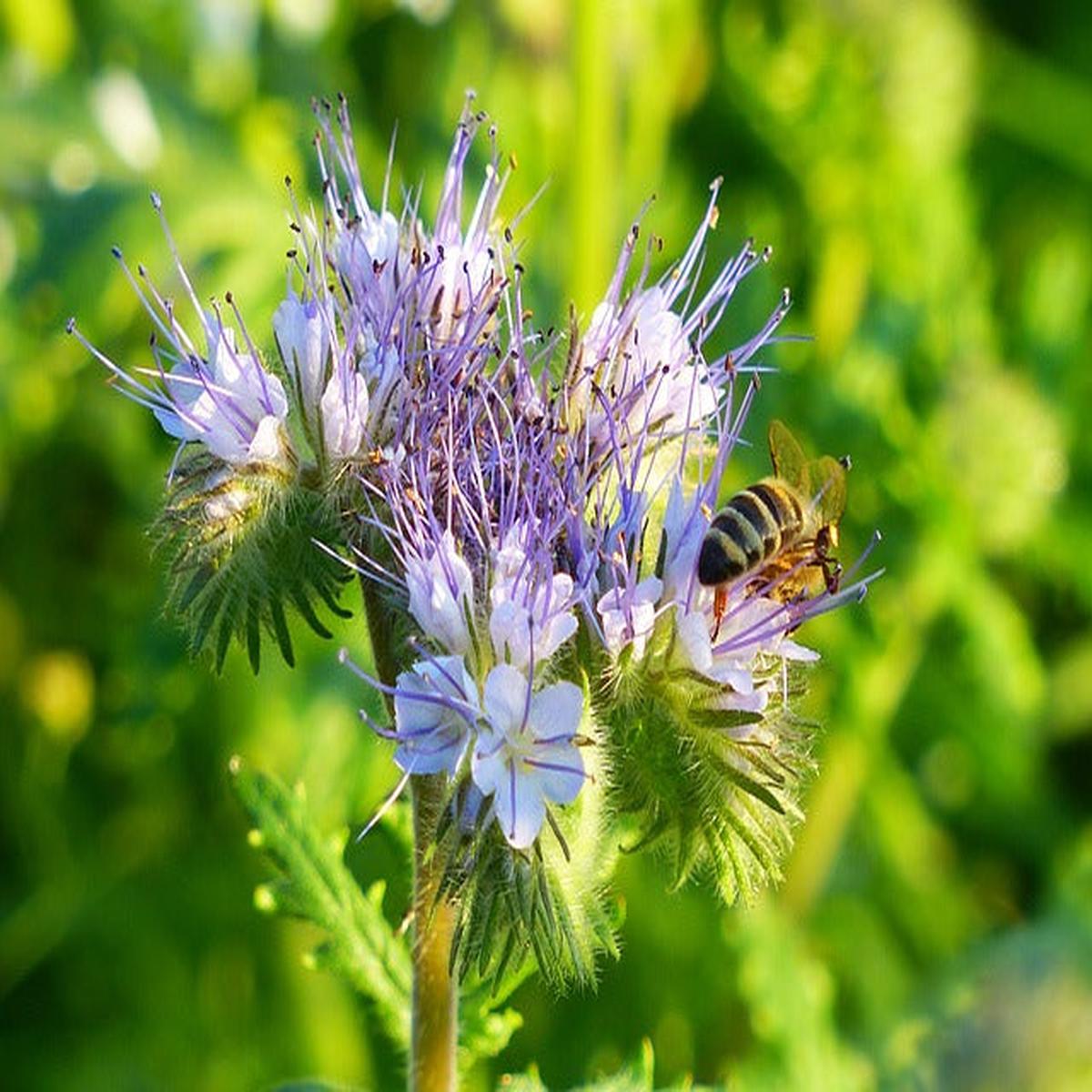
Phacelia is a versatile plant that is used for bee forage, cover crop, erosion control, hay and forage. Phacelia is a top choice for pollinators. This guide growing plant has ample amounts of feathering lavender-blue fragrant flowers that attract bees and other beneficial bugs. Phacelia also has a great root structure for breaking up clay-type soils and it absorbs excess nitrogen and calcium that are in your soil.
Product Information
Product Detail
Product Information
Phacelia is also being increasingly used in California especially in vineyards. Phacelia is quick to grow and flower and grows well in dry soil. It does a good job of limiting nitrate leaching when planted in early fall. It winterkills at about 18F. In cooler regions, it can be used as a between cash crops cover crop in the summer. Phacelia is listed as one of the top 20 honey-producing flowers for honeybees and is also highly attractive to bumblebees and syrphid (hover) flies. Phacelias habit of flowering abundantly and for a long period can increase beneficial insect numbers and diversity, because it provides high quality nectar and pollen. Its also useful as a cut flower with its unusual and attractive blooms, strong stems, and long vase life. Because Phacelia germinates well at cool temperatures and grows quickly, cut flowers can be available by mid-spring.
Phacelia is a small seeded annual herb primarily used as a pollinator attractant. Due to the small seed size, it is coated using standard lime-based coating.
Phacelia tanacetifoliais in herbaceous, non-leguminous, flowering annual in the Hydrophyllaceae family. Its native to the arid Southwest region of the United States and Mexico. Height ranges from 6 to 47 inches. The foliage appears ferny, and the flowers are in flat-topped clusters in shades of purple or occasionally white. Spring- and summer-planted Phacelia flowers approximately 6 to 8 weeks after germination. Flowering continues for 6 to 8 weeks. Phacelia is a long-day plant and requires a minimum of 13 hours of daylight to initiate flowering (roughly mid-April to early September in the mid-Atlantic).
Phacelia is comparable to buckwheat (Fagopyrum esculentum) in many ways. Cultural differences are that buckwheat germinates more readily – especially at higher soil temperatures, and Phacelia is more tolerant of cold and drought.
Phacelia seed needs dark for good germination – bury the seed a 1/4 inch. Phacelia seed also requires cool soil temperatures for germination (although it will grow well in hot, dry soil). Research reports indicate the optimum soil temperature for germination is between 37 to 68F. Wet or compacted soils reduced germination success.
Phacelia is highly attractive to honeybees, bumblebees, and syrphid flies, and these insects are valuable pollinators. It provides both pollen (for protein – needed for egg production) and nectar (for carbohydrates – needed for energy).
Insectary plants are those with high volume, quality nectar and/or pollen that are extremely attractive to beneficial insects. They are planted for the primary purpose of attracting pollinators, and predators and parasites of past insects. Phacelias habit of quick growth and long flowering make it highly suitable as an insectary plant.
Phacelia may be suitable as a winter-killed cover crop when a heavy crop residue is not needed in the spring. Research in other regions shows Phacelia has the potential to produce abundant biomass and does a good job at catching excess nitrates before they leach into groundwater. Phacelia winterkills at about 18F, and the residue breaks down quickly. Its use as a fall/winter cover crop may be appropriate when it will be followed by a vigorous cash crop (e.g. potatoes) in early spring.
*Product packaging may appear different than what is pictured.~~~
Wildflower Planting Time Based on Region:
Southeast
Southwest
Northeast
Midwest
Western
Pacific Northwest
Instructions:
Phacelia seed should be broadcast on a finely prepared seedbed. A cultipacker or rake can be used to bury the seed to a inch. If possible, lightly irrigate. Phacelia is best planted when the soil temperature is between 37 – 68F. Research reports show the seeding rate for Phacelia when used as a cover crop as 11 – 18 lbs./acre. Use 7 – 12 lbs./ac if drilling. Use the higher seeding rate to increase Phacelias weed suppressing abilities.
When used as a fall/winter catch crop, Phacelia needs to be planted as early as possible in the fall. Phacelia winterkills at 18F and the residue breaks down quickly. An early spring crop can be planted into the residue.