$4.00
$5.00
50% OFF! Hot items selling fast—Grab them before they're gone!
 Unconditional Satisfaction GuaranteeNo Shipping Fees Above 302 Months to Decide. Returns Simplified.
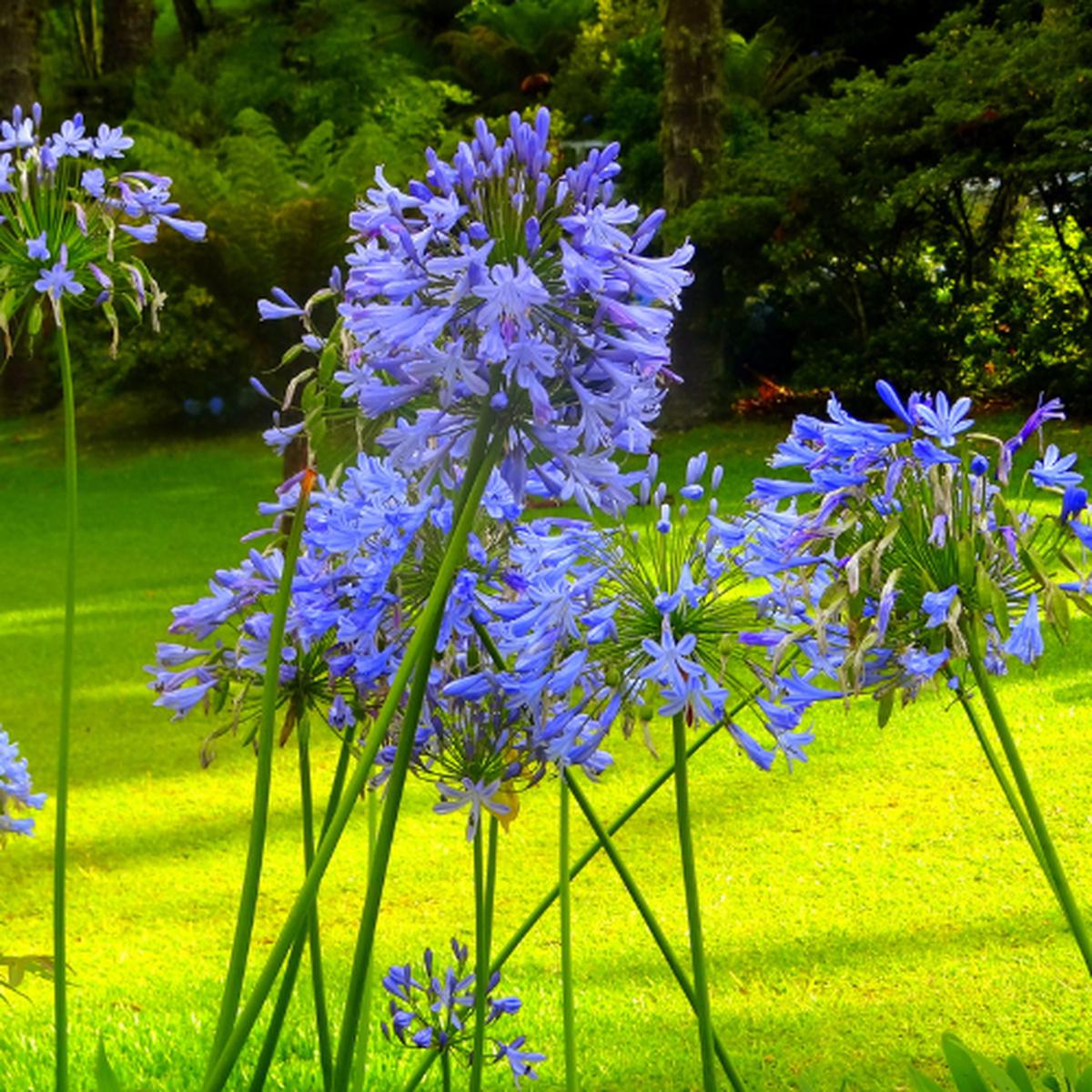
Statuesque sapphire globes dancing on sturdy stems. An architectural, drought-tolerant essential for sun-drenched borders and patio containers.
If you want to recreate that glorious feeling of a sun-drenched Cornish holiday, a Mediterranean terrace overlooking the sea, or a sophisticated coastal garden where tender exotics flourish, Agapanthus is absolutely essential. ‘Big Blue’ is a particularly vigorous, statement-making variety that genuinely lives up to its name, producing impressively large, perfectly spherical flower heads of deep violet-blue trumpet flowers that look like fireworks frozen in mid-explosion against the summer sky.
Held proudly high on strong, sturdy stems above clumps of elegant, strap-like foliage, these architectural blooms add instant height and drama to sunny borders or patio containers. They’re incredibly robust and drought-tolerant once properly established, virtually pest and disease free, and are famously one of the very few plants that actually flower significantly better when their roots are slightly restricted and congested in a potwhich makes them absolutely perfect for container gardening on terraces and balconies.
Understanding the Plant
Agapanthus ‘Big Blue’ is a robust Evergreen Herbaceous Perennial. While some cultivars are deciduous, ‘Big Blue’ is biologically programmed to maintain its broad, mid-green foliar rosettes throughout the UK winter. It is an architectural specialist, possessing a tall, statuesque habit (1m-1.5m) that provides significant vertical structure to the summer garden.
The “Big Blue” Morphology: The flower heads are large umbels composed of dozens of individual trumpet-shaped florets. Each petal features a distinctive sapphire-blue mid-rib, creating a multi-tonal, jewel-like effect. This variety is valued for its stem strength; its fibrous, woody scapes are engineered to support the heavy floral globes even in exposed coastal winds.
Drought Adaptation: Originating from Southern Africa, Agapanthus possesses thick, fleshy roots that act as efficient water storage organs. This physiological adaptation makes it an elite choice for sun-drenched, dry borders and container gardening, as it remains physiologically stable during periods of prolonged summer heat.
Growing Guide
Agapanthus seeds require specific light conditions and consistent warmth to ensure reliable and uniform germination.
How to Sow:
Sow indoors from March to May. Surface sow the seeds onto moist, high-quality seed compost and cover with only a fine dusting of grit or vermiculite (2mm); Agapanthus seeds are photoblastic and require light to trigger germination. Maintain a consistent temperature of 18-21C. Germination is steady but requires patience, typically occurring within 14-28 days.
Where to Plant:
They demand full sun (minimum 6-8 hours daily) and thrive in well-drained, fertile soil. They are specialists of south or west-facing borders and high-impact patio containers. Space plants 45-60cm apart. Crucial: While established plants are hardy to H5, we recommend a generous autumn mulch of leaf mould over the crown to protect the fleshy roots from extreme UK winter freezes.
The “Restriction” Secret:
Agapanthus is one of the few species that produces more prolific flower spikes when its roots are slightly congested. For this reason, they are the premier choice for container gardening. Ensure your pots have excellent drainage; waterlogged roots are the primary cause of physiological failure during the winter dormancy period.
Plant Specifications
| Botanical Name | Agapanthus ‘Big Blue’ |
| Common Name | African Lily / Lily of the Nile |
| Plant Type | Evergreen Perennial |
| Hardiness | H5 (Hardy throughout most of the UK) |
| Light Requirements | Full Sun |
| Height | 1m – 1.5m (Tall & Statuesque) |
| Spread | 50cm – 100cm |
| Spacing | Plant 60cm apart |
| Flowering Period | July to September |
| Perfect For | Large High-Impact Patio Containers Architectural Sun-Drenched Borders Coastal & Exposed Garden Schemes Late-Summer Bumblebee Forage |
| Seeds per Packet | Approximately 50 seeds |
Beautiful Garden Combinations
The stately blue globes of ‘Big Blue’ work spectacularly with architectural partners from our available range:
Sowing & Flowering Calendar
Sow indoors in spring for a summer-long display of stately sapphire globes that will return year after year, eventually naturalising through self-seeding.
| Month | J | F | M | A | M | J | J | J | A | S | O | N | D |
|---|---|---|---|---|---|---|---|---|---|---|---|---|---|
| Sow Indoors | |||||||||||||
| Flowering |
Architectural Winter Tip
Once the violet-blue globes fade, do not rush to cut the stems back. The structural seed heads of Agapanthus provide significant winter interest, especially when touched by frost, acting as natural sculptures throughout the dormant season.
Known for its stamina and ability to thrive in sunny, dry environments, Agapanthus ‘Big Blue’ is an essential choice for those wanting to create a romantic, low-maintenance garden that provides non-stop architectural interest for both the border and containers.
Want more detailed growing advice?
View our Complete Growing Guide for Perennials